We’re happy to announce the first round of invited speakers below – keep an eye out as we announce more in the coming weeks.
International Speakers
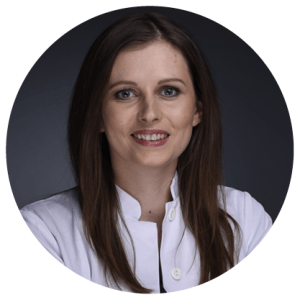
Prof Stefanie Corradini
LMU University, Germany
Prof. Stefanie Corradini is vice chair of the Department of Radiation Oncology at LMU University in Munich, Germany. Her clinical focus is on surface-guided RT, MR-guided radiotherapy and brachytherapy. She is head of the MR-guided radiotherapy program and brachytherapy service with a special focus on ablative single-fraction radiotherapy.

Dr Chris Crane
Memorial Sloane Kettering Cancer Centre
Over the past 25 years, my research and clinical work has mostly focused on developing curative treatments for pancreatic and hepatic malignancies. My initial efforts were focused on the evaluation of novel sensitizers with conventional doses of radiation using 3D conformal techniques. In 2006, I changed my focus to dose escalation, with the goal of delivering what we now call ablative doses for inoperable pancreatic and hepatic tumors.
Over time, we integrated diagnostic quality CT image guidance, respiratory motion management, heterogeneous dosing, and selective adaptive planning to create hypofractionated ablative treatment regimens (100Gy BED) in 5, 10, 15, and 25 fractions that have led to 80% local tumor control and a doubling of median survival with surprisingly low morbidity. The broader adoption of these concepts has emerged in the form of MR guided 5 fraction ablative treatment that more actively controls and corrects for respiratory and digestive motion. This is option is the clear way forward and pancreatic cancer programs are being constricted around these machines now.
We have an active program using MRgRT in pancreatic cancer. Overall we treat 150 cases/yr (600 total and 100 with Unity). We have a NCI SPORE grant for pancreatic cancer, and R-01 grants supporting 3D tracking, and dose accumulation in the mobile GI tract with MRgRT. My H-index is 89, I have received 4 teaching awards at MD Anderson and MSKCC.
Local Speakers

A/Prof Myo Min
University of Sunshine Coast and Griffith University
View Profile
A/Prof Myo Min is a clinician with a strong interest in research. During his post training fellowship years, he undertook a PhD program, at University of New South Wales, investigating the role of functional imaging in head and neck cancer. He then completed his PhD in medicine in 2016. He has been the lead investigator of the local functional imaging-guided radiation therapy projects and of some successful competitive and collaborative grants, including the Queensland Health New Technology Funding and Evaluation Program grant. Funded by this grant, Sunshine Coast University Hospital is the first tertiary hospital in Queensland to implement an MR simulator for patients undergoing radiation therapy treatment. He is a senior staff specialist (radiation oncology) at Sunshine Coast University Hospital. His research projects are focused on functional MRI-guided radiation therapy and is currently a supervisor of four PhD students.

Prof Yves de Deene
Honorary Professor, Biomedical Engineering &
Medical Physics, Western Sydney University
View Profile
Yves De Deeney is a Biomedical Engineer / Medical Physicist with focus on quantitative MRI and 3D radiation dosimetry. He currently works at the Cancer Therapy Centre in Liverpool Hospital (Australia) with affiliations with the Ingham Institute and Western Sydney University.
He is passionate about research and teaching in the field of medical imaging physics. His main research interests and activities are related to 3D radiation dosimetry and quantitative and multi-nuclear MRI. In his previous role as professor of Biomedical Engineering, he lectured on biomedical engineering fundamentals, MRI physics, medical physics and general engineering.
He completed his PhD in 2000 and after 4 years of post-doctoral research, he became a tenured academic at the Gent University (Belgium) in 2004.
In 2013, he joined the University of Sydney and became a full professor in Biomedical Engineering at Macquarie University in 2015. Because of ethical concerns around declining standards in education and the corporatization of Australian universities, he resigned from the university in 2021 and joined Liverpool Hospital in the role of imaging physicist.
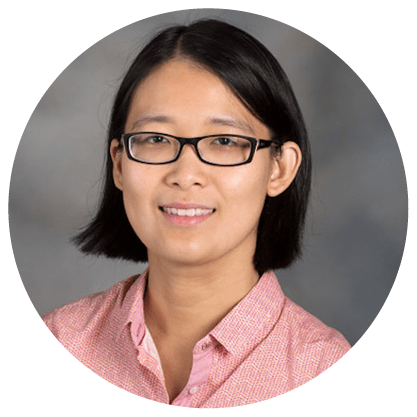
A/Professor Sweet Ping Ng
Austin Health, Melbourne
Associate Professor Sweet Ping Ng is an early career radiation oncologist based at Austin Health in Melbourne, specializing in the treatment of head and neck, brain, upper gastrointestinal, and hepatobiliary cancers. She acquired her training at the Peter MacCallum Cancer Centre, followed by a fellowship at MD Anderson Cancer Center. Dr. Ng’s PhD research focused on advancing the field of head and neck cancer through the exploration of innovative imaging techniques and blood biomarkers. Her expertise extends to the application of multimodality imaging in head and neck stereotactic radiotherapy. Currently, Dr. Ng is a recipient of the Victorian Cancer Agency Early Career Fellowship, for her research around the development of imaging biomarkers and the integration of imaging technologies in adaptive and personalisation treatment of glioblastoma and head and neck cancers.

Dr Jeremy de Leon
Genesis Care, St Vincents
Dr Jeremy de Leon is a consultant Radiation Oncologist and Head of the MRI Linac and research program at GenesisCare, St Vincents. He subspecialises in the treatment of urogenital, lung, upper gastrointestinal, liver and stereotactic treatments. Dr de Leon and his team are the most experienced in Australia using MRI adaptive radiotherapy in the treatment of cancer and have published and presented their work in multiple national and international conferences. Dr de Leon’s research interest is in advanced technology to improve radiotherapy treatment and the use of imaging biomarkers as predictors of outcome.
 AUS MRinRT